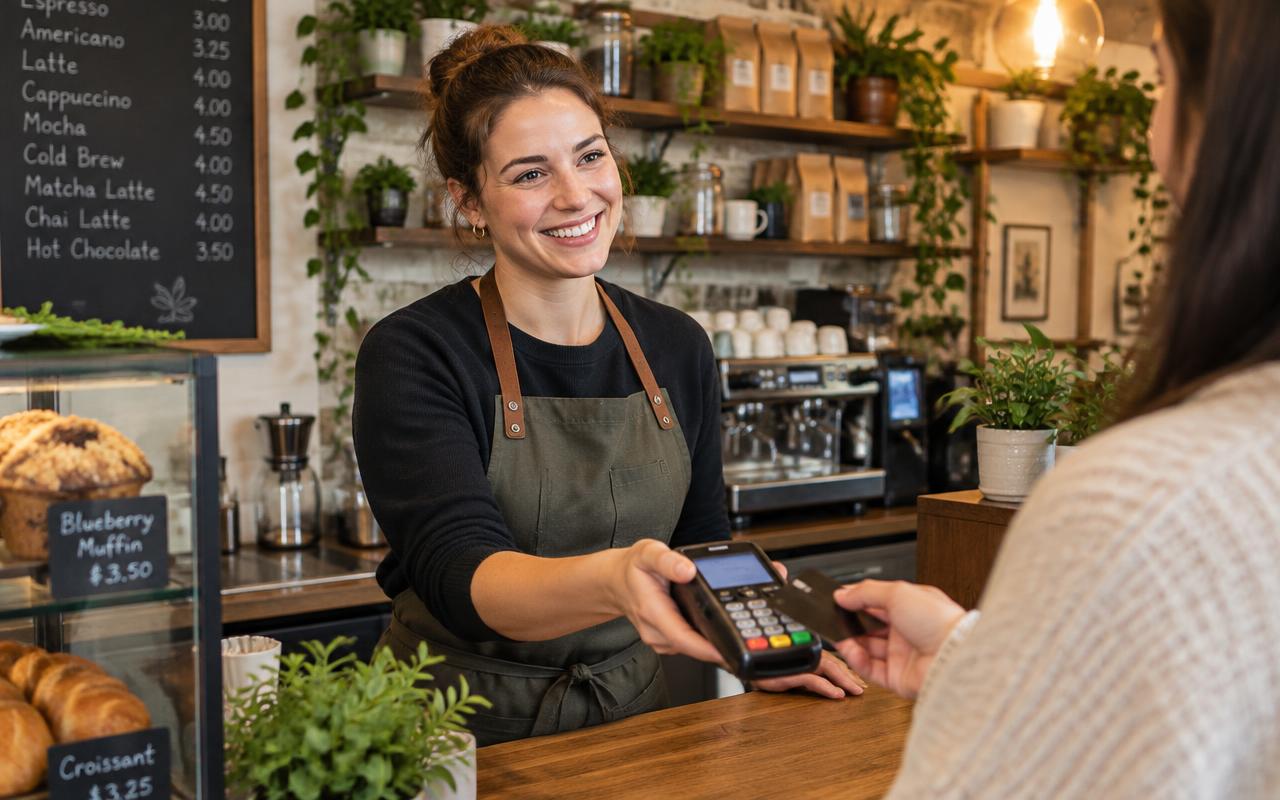
Your payment setup does more than move money. It shapes how easily customers can buy from you, how reliably you can serve them, and how effectively you can plan for growth.
Better payment solutions do not guarantee higher revenue. But they can remove barriers to purchases and make it easier to sell in new ways. Here are five areas where improvements can make a difference.
1. Faster Checkout Means More Completed Sales
Every extra step at checkout is another opportunity for a customer to give up. In a store, slow transactions can create long lines. Online, unnecessary form fields or a confusing payment flow can interrupt an otherwise straightforward purchase.
A streamlined checkout keeps customers moving from choosing a product to completing their payment. The goal is to remove avoidable friction without sacrificing necessary security checks.
In person: Keep payment devices ready, easy to use, and accessible to staff and customers.
Online: Review checkout on mobile devices and remove unnecessary steps.
Across channels: Make pricing, payment instructions, and confirmation messages clear.
Where to start: Walk through a purchase as a customer. Note every delay, repeated entry, or unclear instruction, then prioritize the obstacles most likely to interrupt a sale.
2. More Payment Options Can Help You Reach More Customers
Customers have different payment preferences. Some want to use a card, while others prefer a digital wallet or a contactless tap. Supporting familiar options can reduce the chance that a customer walks away because paying feels inconvenient.
That does not mean you need every payment method available. Focus on the options that fit your customers, sales channels, and operating needs.
Ask staff which payment methods customers request.
Review whether your online checkout supports the options your customers use.
Compare processing costs, integration needs, and settlement terms before adding a method.
Where to start: Identify a frequently requested payment option you do not currently support. Evaluate whether adding it would solve a real purchasing barrier.
3. Better Uptime and Reliability Help Protect Sales
Payment downtime can stop sales at exactly the wrong moment. During a busy service period or seasonal rush, even a temporary disruption can leave customers waiting and staff searching for workarounds.
Reliable payment technology helps keep transactions moving. Just as important is having a clear support process and a plan for handling interruptions.
Ask your payment provider how issues are monitored and escalated.
Keep devices, software, and network connections maintained.
Train staff on approved backup procedures and when to contact support.
If a provider offers offline processing, understand its limits and risks before relying on it. A payment accepted offline may still be declined when it is submitted later.
Where to start: Document what your team should do if a terminal, internet connection, or online payment flow stops working. Test that plan before your next busy period.
4. Better Data Supports Smarter Decisions
Payment reporting can help you understand sales patterns, including when transactions happen and how customers choose to pay. When connected with point-of-sale, inventory, or customer systems, it can also help show what sells and who is buying, where that information is available and appropriately collected.
Those insights can support more informed decisions about inventory, staffing, and marketing.
Stock more effectively: Use product-level sales data to spot demand patterns.
Staff more strategically: Review transaction activity by day and time.
Evaluate promotions: Compare sales trends during promotional periods while considering other factors that may affect results.
Where to start: Choose one recurring business decision and identify the report that could improve it. Consistent review is more useful than collecting data without acting on it.
5. Recurring Billing and Online Payments Open New Revenue Channels
Your business does not have to rely only on purchases made during opening hours. Subscriptions, digital invoicing, and online checkout can give customers more opportunities to buy or pay.
The best approach depends on what you sell. A subscription may suit an ongoing service, while digital invoices may make more sense for project-based work. Online checkout can let customers place orders when your physical location is closed.
Subscriptions: Offer recurring billing where customers receive genuine ongoing value, with clear consent, terms, and cancellation instructions.
Digital invoices: Give customers a convenient way to pay for completed work or agreed services.
Online checkout: Make eligible products or services available beyond your storefront hours.
Where to start: Select one channel that fits your business model. Plan fulfillment, customer support, refunds, and failed-payment handling before launching.
Choose Payment Improvements That Support Your Business
The right payment partner should help you evaluate more than processing rates. Checkout usability, payment options, reliability, reporting, and integrations all affect how well your payment setup supports sales.
Start with your biggest obstacle, establish a baseline, and track what changes after an improvement. Depending on your business, useful measures might include checkout completion, transaction failures, or online orders. Review costs alongside revenue to understand the overall business impact.
EncompassPay can help you explore payment optimization and merchant account options that fit your business. A focused review of your current setup is a practical first step toward making payments work better for your customers and your team.